Design Ops Handbook/Chapter 01 of 06
Design Request Intake & Governance
How design support is requested, evaluated, prioritized and assigned. This framework replaces ad-hoc requests with a transparent pipeline that protects designer focus and maps capacity to the work that matters most.
Section 01
Request Channels & Intake Standards
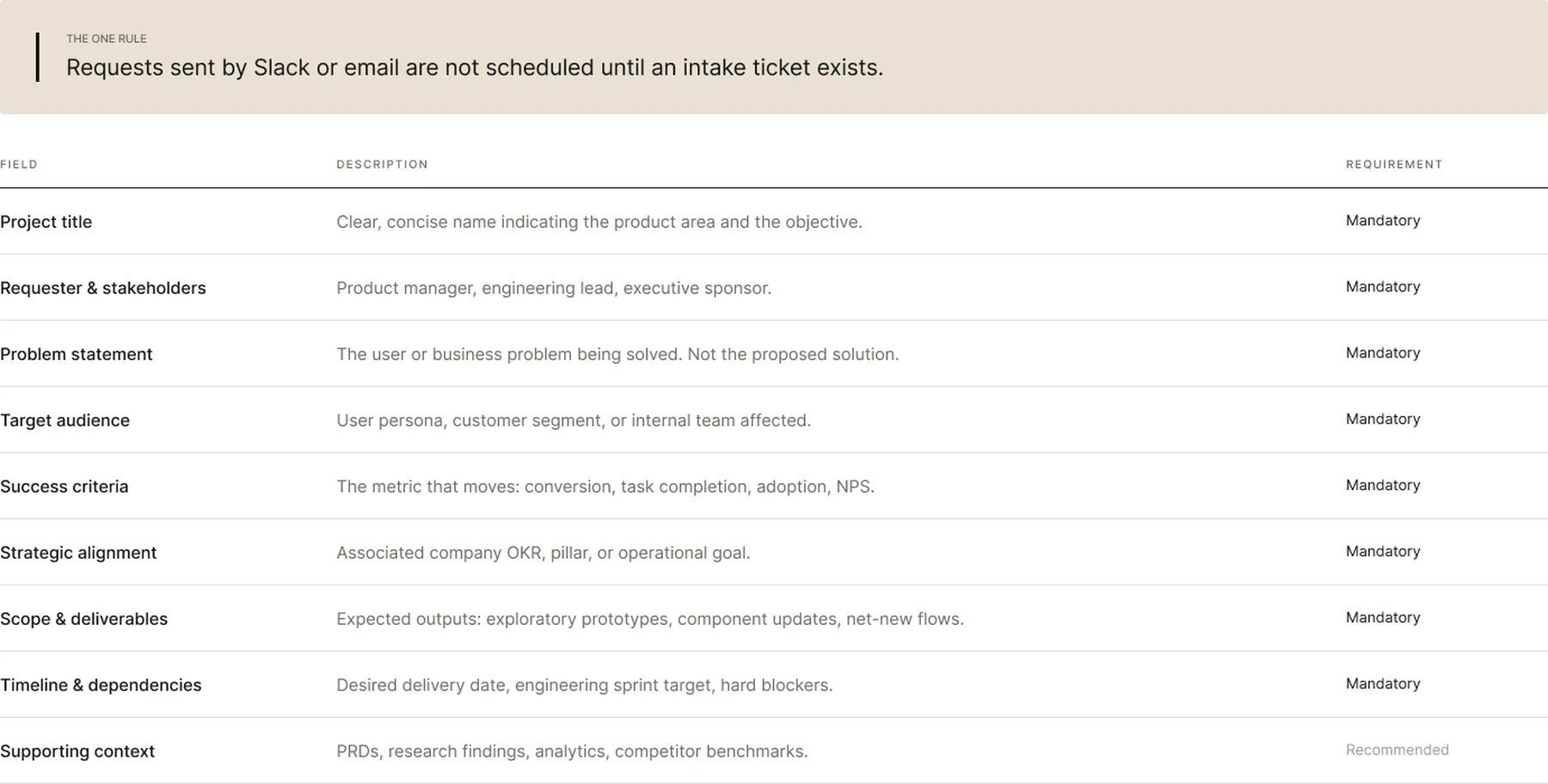
All design requests enter through a single system of record. Pick one tool and hold the line: Jira, Asana, Linear or Airtable. The system of record is what makes capacity legible, and capacity is what makes prioritization honest.
Section 02
The Triage Cadence
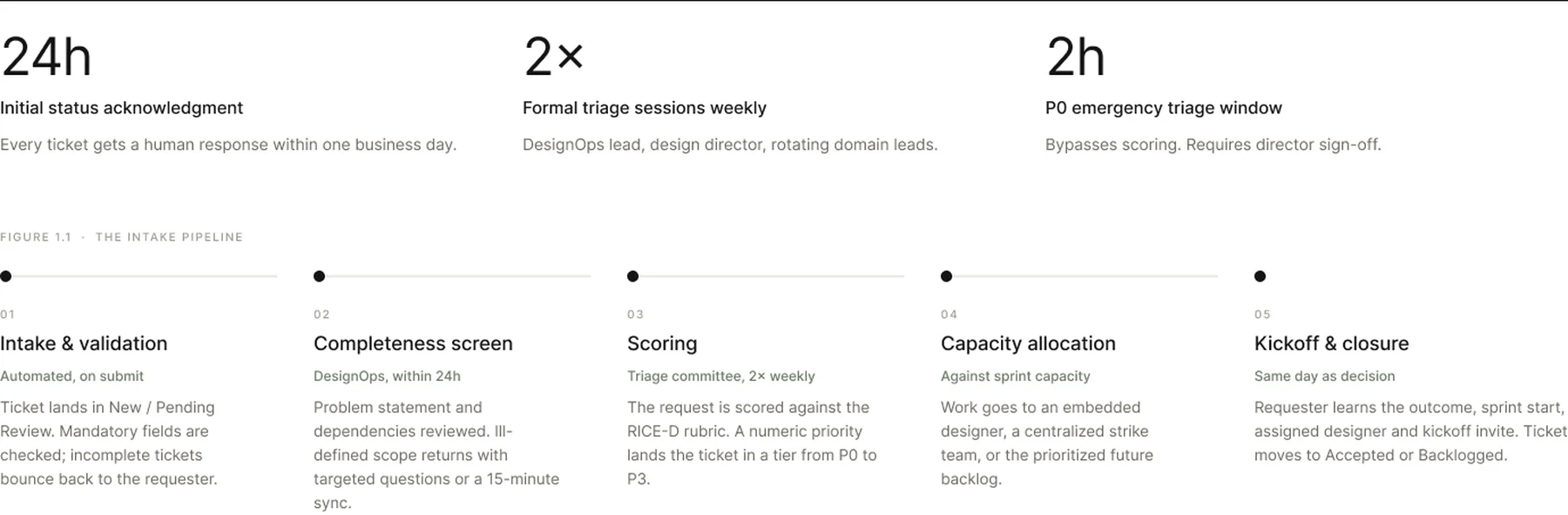
Triage runs on a set schedule led by DesignOps and design leadership. A published cadence is what turns “when will someone look at this?” from a Slack question into a known answer.
Section 03
The RICE-D Rubric
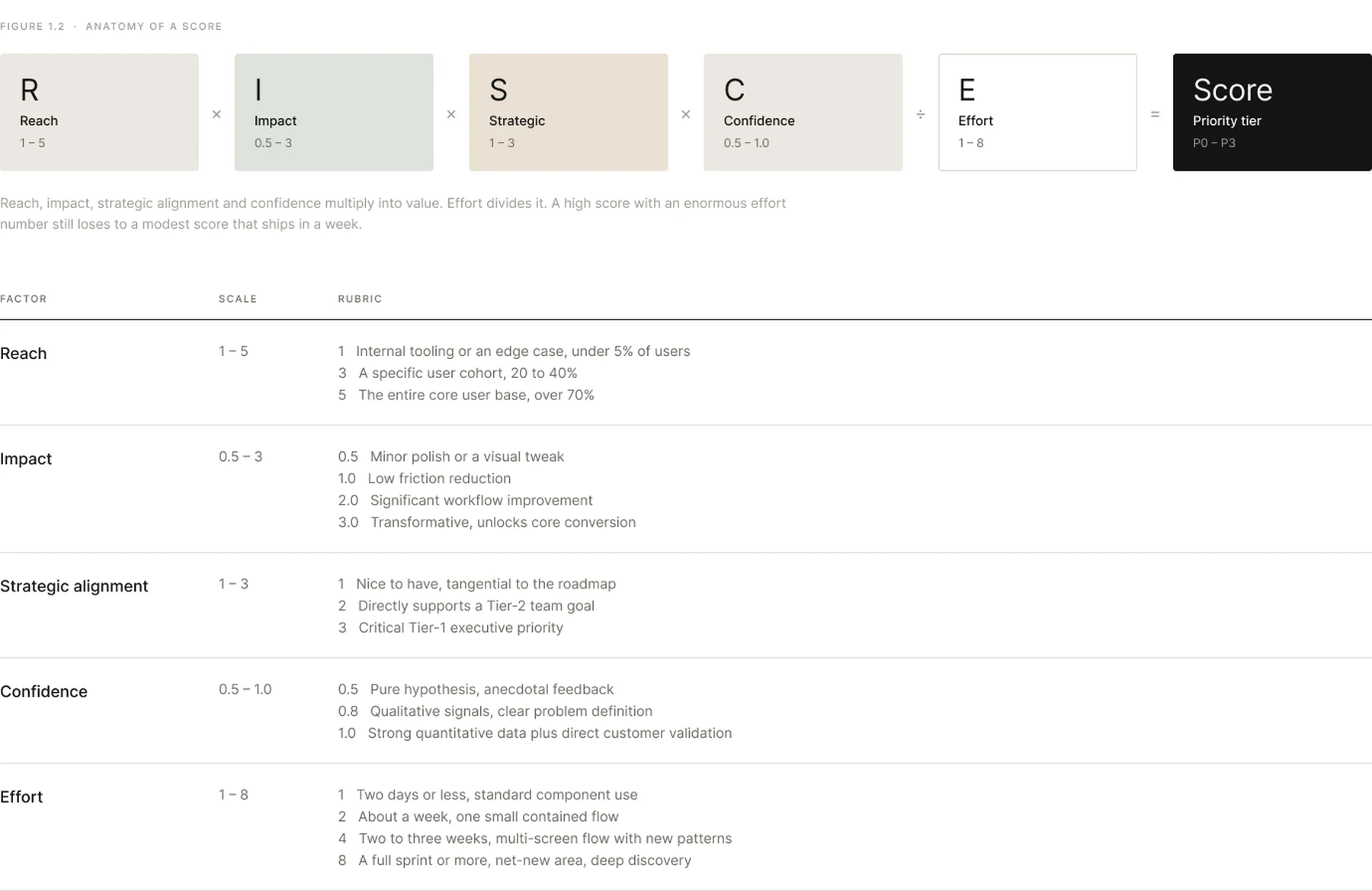
Scoring exists to make the argument public. Four factors multiply into value, effort divides it back down, and the result is a number two people can disagree about precisely rather than vaguely.
Section 04
Priority Tiers
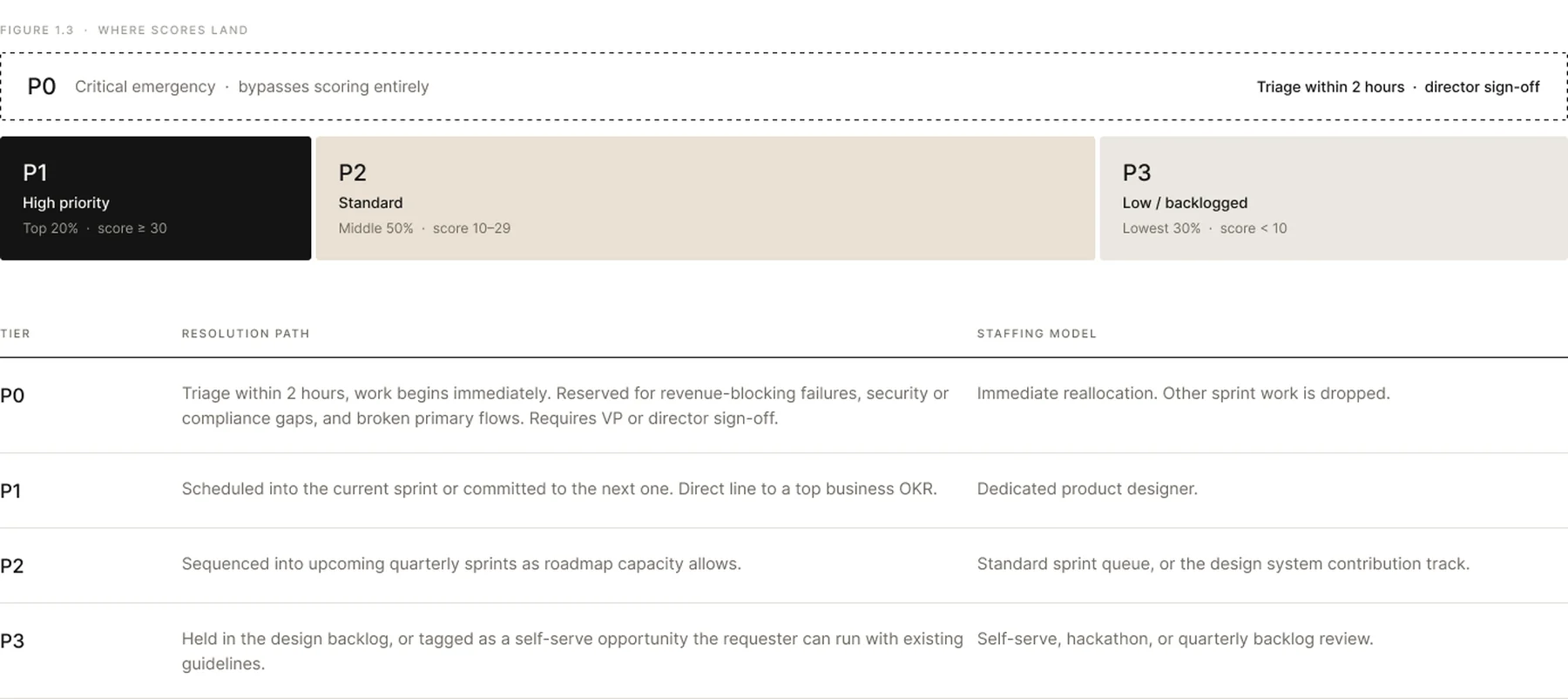
Tiers are relative, not absolute. P1 is the top fifth of what was scored this cycle, which means the bar moves with the work in front of you rather than with how loudly anyone asked.
Section 05
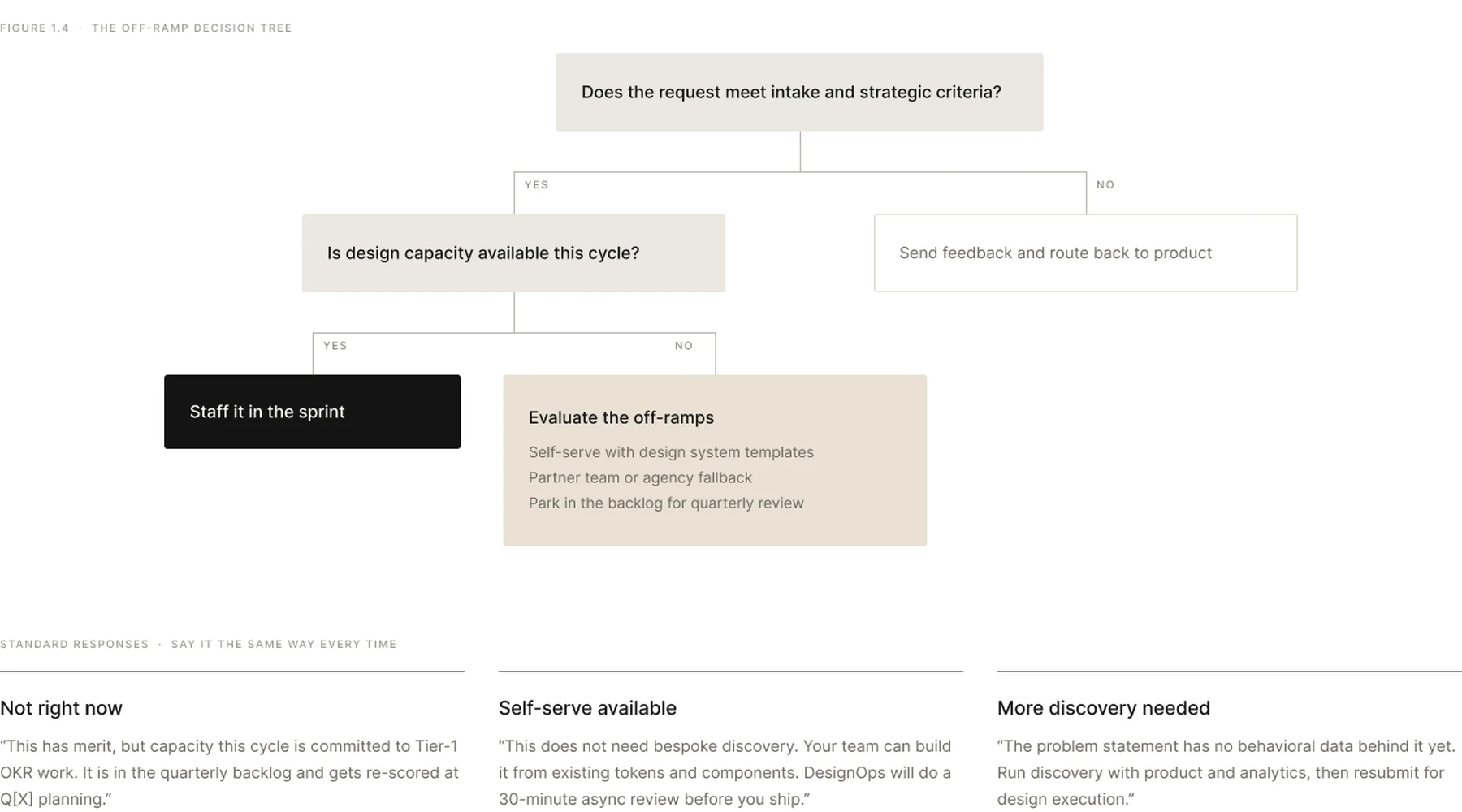
De-prioritization & Saying No
A triage system earns trust by having good off-ramps, not by having a high acceptance rate. Every no should come with a route: self-serve, a partner team, or a date when it gets looked at again.
Section 06
Health Metrics for Intake
Reviewed monthly by DesignOps. The rejection rate is the one people misread: a low number does not mean the team is helpful, it means the gate is not doing its job.
